
SellingGaston County, NCNo. 118
Home Staging Tips to Sell Faster and for a Better Price
A room-by-room staging playbook for sellers in Gaston County and the Charlotte area, plus when virtual staging makes sense.

By Ally BohananPublished 4 min read
In this article
- Where should you start?
- How should you arrange furniture?
- What colors and lighting work best?
- How do you stage the rooms that matter most?
- Should you stage for a specific buyer?
- Is virtual staging a good idea?
- What staging mistakes should you avoid?
- How do you get ready for listing photos?
- Frequently asked questions
The short answer
Home staging helps you sell faster and for a better price by making rooms look larger, brighter and easy to live in. Declutter and deep clean first, then arrange furniture for clear flow, give each room one purpose, use neutral colors and layered lighting, and focus on the living room, kitchen, primary bedroom and baths.
Key takeaways
- Declutter and deep clean first; no amount of decor fixes a crowded, dusty room.
- Give every room one clear purpose and pull furniture back to open walkways.
- The living room, kitchen, primary bedroom and baths matter most to buyers.
- Neutral walls and layered lighting make rooms look larger in photos and in person.
- Virtual staging can help vacant listings online, but label the photos clearly.
Most buyers see your home online before they ever walk in, and the photos decide whether they book a showing. Staging is how you make those photos, and the showings that follow, work in your favor. It isn't decorating. Decorating reflects your taste; staging is designed to appeal to as many buyers as possible so they can picture their own life in the house.
National research backs the idea. In NAR's Profile of Home Staging, buyers' agents report that staging makes it easier for buyers to visualize a property as their future home.
Where should you start?
Declutter
Clutter makes rooms look small and distracts buyers from the house itself. Pack up as if you've already moved:
- Living areas: extra furniture, collections, stacks of books and most framed photos
- Kitchen: everything but one or two items off the counters; thin out the pantry
- Bedrooms: extra chairs, laundry, items under the bed; half-empty closets
- Bathrooms: toiletries off counters and out of showers
For a full plan, see how to declutter before listing.
Deep clean
A spotless home reads as well maintained. Clean windows inside and out, baseboards, cabinet fronts, light fixtures, vents, appliances, grout and floors. Address odors at the source rather than covering them up.
Fix the small things
Dripping faucets, burned-out bulbs, chipped paint and sticking doors make buyers wonder what else has been neglected. Fix them before photos.
How should you arrange furniture?
- Open the walkways. Buyers should be able to walk through each room without turning sideways.
- Pull furniture off the walls where space allows, and group seating for conversation.
- Give every room one purpose. A bonus room that's half office, half gym reads as storage. Pick one: office, guest room, dining room or family room.
- Remove about a third of what's there in most rooms. It almost always looks better.
What colors and lighting work best?
Neutral walls such as soft whites, warm greiges and light taupes make rooms feel bigger and let buyers imagine their own furniture. If a room is a bold color, repainting is one of the most effective staging moves you can make.
For lighting, open every blind and curtain, use the same warm bulb color throughout and add lamps to dark corners. A mix of ceiling lights, table lamps and floor lamps makes rooms feel warm instead of flat.
How do you stage the rooms that matter most?
| Room | Focus on | Avoid |
|---|---|---|
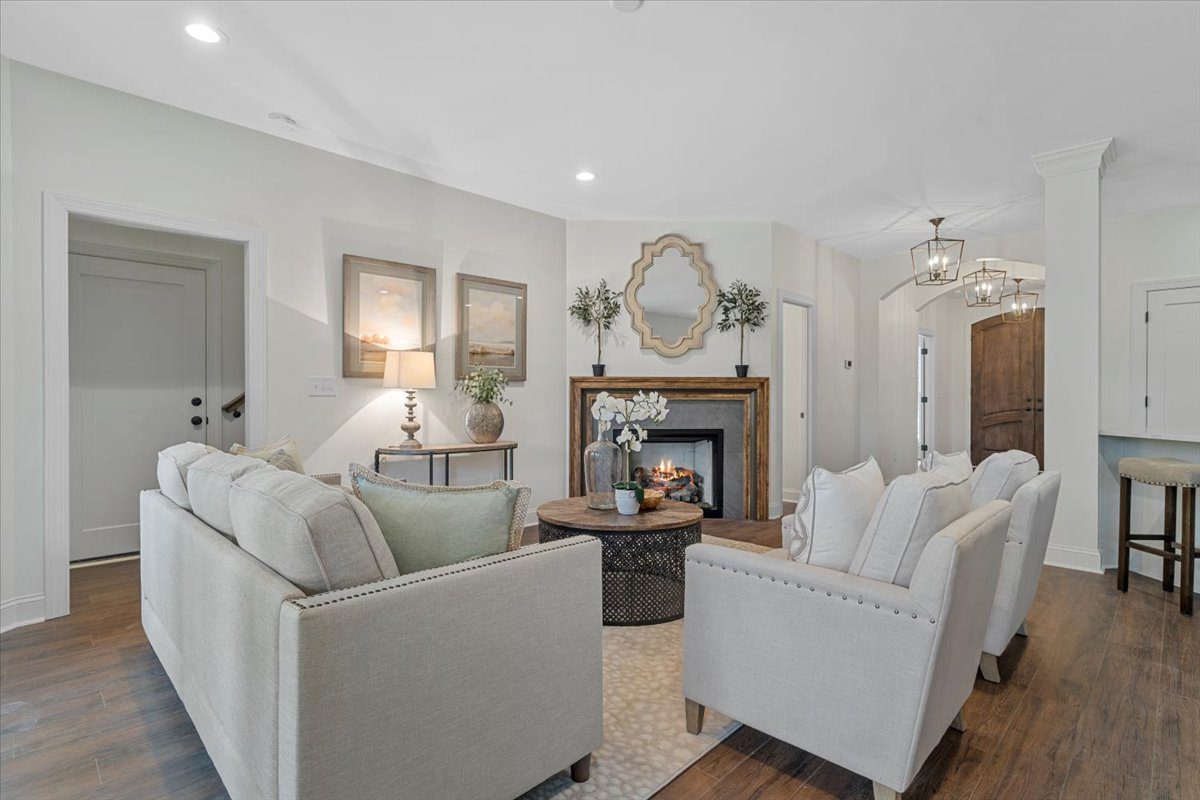
| Living room | A balanced seating group, a clear focal point (fireplace or windows), one rug that fits the space | Oversized sectionals, too many throw pillows, cords everywhere |
| Kitchen | Clear counters, organized cabinets, a bowl of fruit or one plant, updated hardware if it's dated | Magnets on the fridge, small appliances out, dish racks |
| Primary bedroom | Fresh, light bedding, matching nightstands and lamps, open floor space | Exercise equipment, desks, piles of clothes |
| Bathrooms | Fresh white towels, clean glass and grout, a simple accent | Personal products, bath mats that are worn |
| Outdoor spaces | Clean patio or deck, a simple seating set, trimmed beds | Grills with covers off, kids' toys, stored items |
Should you stage for a specific buyer?
Think about who's most likely to buy your home and show them what they're looking for:
- Families: a functional mudroom or drop zone, a play area, storage
- Remote workers: a quiet, clearly staged home office
- Downsizers: main-level living, low-maintenance features, easy access
Your agent can tell you who's been buying in your neighborhood and price range.
Is virtual staging a good idea?
| Traditional staging | Virtual staging | |
|---|---|---|
| How it works | Real furniture and decor in the home | Furniture added digitally to listing photos |
| Best for | Occupied or vacant homes where showings matter most | Vacant homes, especially for online marketing |
| Strengths | Buyers experience the space in person | Lower cost and fast to produce |
| Watch out for | Cost and scheduling | Buyers may be disappointed by an empty home; photos must be clearly labeled and shouldn't hide defects |
Many sellers combine the two: stage the main living areas in person and use virtual staging for secondary rooms.
What staging mistakes should you avoid?
- Leaving too many personal items and photos out
- Covering up repairs instead of making them
- Overcrowding rooms with furniture or decor
- Ignoring the yard, porch and patio
- Letting the home slip between showings
How do you get ready for listing photos?
- Turn on every light and open every blind evenly.
- Make beds and smooth towels.
- Clear counters, sinks and showers.
- Move cars, trash cans and hoses out of exterior shots.
- Put pets, pet bowls and litter boxes out of sight.
Tip: Look at each room through your phone's camera before the photographer arrives. Clutter and crooked furniture are much easier to spot on a screen.
Ally can walk your home with you and point out the changes that will matter most. Learn more about home staging and selling your home, then Request a Pricing Consultation below.
Sources cited in this article: National Association of Realtors. Figures are as reported by those sources at the time of writing.